How Court Reporting Works: A Step-by-Step Guide to the Legal Process
Court reporting is an essential component of the lawful system. It entails an organized procedure that ensures exact paperwork of proceedings. From prep work to the last shipment of transcripts, each action is crucial. Recognizing exactly how court reporters operate deals understanding into the integrity of lawful records. The nuances of their job can exceptionally impact lawful results, prompting inquiries regarding the methods and technologies they employ. What are the details methods that specify this occupation?
The Role of Court Reporters in the Legal System
Court press reporters play a vital role in the legal system by offering reputable and exact transcripts of court process. Their work warranties that every spoken word throughout trials, hearings, and depositions is documented, which is essential for preserving a main record of events. This transcription is basic for appeals, as it permits higher courts to evaluate the process and identify if any type of mistakes were made during the trial.
In addition, court reporters aid in preserving the stability of the lawful procedure by creating verbatim records that can be described by legal representatives, judges, and other events entailed in a case. They commonly make use of specialized devices and software program to capture dialogue with accuracy. Past the courtroom, their transcripts can function as essential historic records, supplying insight into judicial procedures and the legal system's functioning. Inevitably, court press reporters contribute significantly to transparency and responsibility in lawful issues.
Planning for a Court Reporting Session
Preparation is important for a successful court reporting session, as it ensures the accuracy and effectiveness of the transcription procedure. Court press reporters start by assessing instance products, consisting of pleadings and witness checklists, to acquaint themselves with the terms and context. They likewise make sure that they have the essential tools, such as steno devices, notebooks, and back-up devices, prepared for use.
Prior to the session, communication with legal teams is vital. Reporters frequently clarify any specific requests pertaining to format or liked terminology. Additionally, they might arrange to meet with lawyers or witnesses to go over the procedures and confirm the schedule. Getting here very early to set up the equipment permits repairing prospective technical concerns. Generally, extensive preparation not just improves the reporter's confidence yet also adds considerably to producing a accurate and clear document of the legal proceedings.
Recording the Record: Strategies and Devices
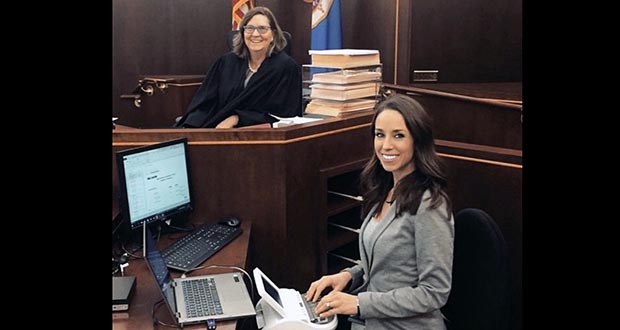
Using innovative methods and trusted tools, stenotype reporter carefully capture the spoken word during legal procedures. They use stenography, an approach involving a specialized machine that enables them to type several noises all at once, thereby transcribing dialogue in actual time. This equipment, called a steno key-board, is equipped with keys that represent syllables and words, enabling swift and accurate input.
In addition to stenography, court press reporters might make use of audio recording tools as supplementary devices. These tools act as backups, making sure that no important details is shed during procedures. Furthermore, some reporters incorporate software program that boosts their transcription performance, supplying attributes such as voice recognition and automated formatting.
Appropriate positioning and emphasis are vital; reporters need to preserve attention on all audio speakers, catching nuances and inflections that add to the document. With a combination of ability and innovation, stenotype reporter promote the honesty of the legal procedure by making sure a complete and accurate record of occasions.
Transcribing the Process
Recording the proceedings requires stenotype reporter to convert talked dialogue right into written message with extraordinary accuracy and rate. This procedure normally occurs instantly after the recording has actually been captured, making use of specialized software that permits for seamless transcription. Stenotype reporter have to listen find more information diligently to the sound, guaranteeing that every inflection, pause, and word is accurately stood for in the records.
They typically count on shorthand systems, individual transcription skills, and advanced innovation to promote this task. The environment in which they work can be hectic and sometimes chaotic, as lawful process frequently include several audio speakers and technological lingo. Stenotype reporter must likewise preserve focus to record subtleties in tone and context that might be important for the legal record. Ultimately, the precision of the transcription is vital, as it offers as a certification for future referral in lawful proceedings.
Evaluating and Editing the Transcript
The process of reviewing and editing the records is essential for making certain precision in court reporting. Stenotype reporter usually team up with lawyers to clear up any ambiguities and validate the accuracy of the taped statements. This partnership is vital for preserving the integrity of the lawful document.
Significance of Accuracy
Precision offers as the foundation of effective court reporting, as even small errors can significantly modify the significance of legal proceedings. The assessing and modifying process is crucial in ensuring that records reflect the talked word with fidelity. Court reporters diligently confirm names, technical terms, and lawful jargon to keep precision. This focus to detail helps protect against misconceptions that could influence situation outcomes. Moreover, accuracy promotes trust amongst legal specialists, clients, and the court, enhancing the stability of the judicial system. Mistakes can lead to conflicts or allures, making it imperative for reporters to improve their job thoroughly. Eventually, the search of accuracy not only improves the integrity of the transcript however additionally upholds the requirements of the lawful profession.
Partnership With Lawyers
Cooperation between stenotype reporter and attorneys is important throughout the reviewing and editing phase of transcript production. This process ensures that the last paper properly mirrors the talked word and click this link sticks to lawful criteria. Lawyers often evaluate transcripts for certain terms, context, and any potential errors that could impact the case. Stenotype reporter rely upon attorneys' competence to clear up uncertain sections or highlight crucial statements. Effective interaction is vital; lawyers may offer feedback or request corrections, which court press reporters have to attend to immediately. This partnership not only boosts the top quality of the records yet additionally contributes to a smoother legal procedure. Inevitably, joint initiatives cause a reputable and exact record, important for future references and lawful process.
Delivering the Last Transcript to Customers
Upon completion of the transcription procedure, court reporters diligently prepare the final record for shipment to their clients. This final records goes through comprehensive checking to guarantee precision, as any kind of errors can significantly influence legal process. Court reporters style the document according to the certain requirements set forth by the customers or lawful firms, consisting of pagination, indexing, and any needed displays.
Court reporters might give a cover letter summing up key details and offering further support if needed. This complete strategy guarantees that customers obtain a sleek, specific, and conveniently accessible records, necessary for their lawful requirements.
Frequently Asked Questions
What Credentials Are Required to End Up Being a Stenotype Reporter?
To become a stenotype reporter, people commonly require a senior high school diploma, completion of a court reporting program, and qualification or licensure, relying on state demands. durham court reporting. Proficiency in shorthand and modern technology is likewise important for success
How Lengthy Does It Take to Complete Court Reporting Training?
Generally, completing court reporting training takes between 18 months to four years, Your Domain Name depending on the program's strength, the trainee's pace, and the details demands of the territory in which they want to practice.

What Is the Average Income of a Court Reporter?
The typical wage of a court reporter varies by place and experience, commonly ranging from $45,000 to $100,000 each year (durham court reporting). Factors such as expertise and need can significantly affect their revenues in different regions
Are Court Reporters Required to Have Qualification?
Stenotype reporter are usually called for to get accreditation, which ensures they have the necessary skills and understanding for exact transcription. Certification requirements can vary by state or territory, mirroring expert requirements within the lawful area.
Can Court Reporters Job From Another Location or Freelance?
Stenotype reporter can work remotely or freelance, offering versatility in their occupation. Several make use of technology to transcribe proceedings from various locations, permitting diverse chances in the legal field while maintaining a work-life balance.
Court reporters play an important role in the legal system by providing dependable and accurate transcripts of court proceedings. Additionally, court press reporters aid in maintaining the stability of the legal process by creating verbatim documents that can be referred to by legal representatives, courts, and various other celebrations involved in a case. Utilizing advanced strategies and trusted tools, court press reporters carefully capture the talked word throughout legal proceedings. Court press reporters need to likewise preserve concentration to record nuances in tone and context that may be essential for the lawful record. To become a court press reporter, people generally require a high institution diploma, completion of a court reporting program, and qualification or licensure, depending on state needs.
Comments on “How to get started with durham court reporting: step-by-step guide”